
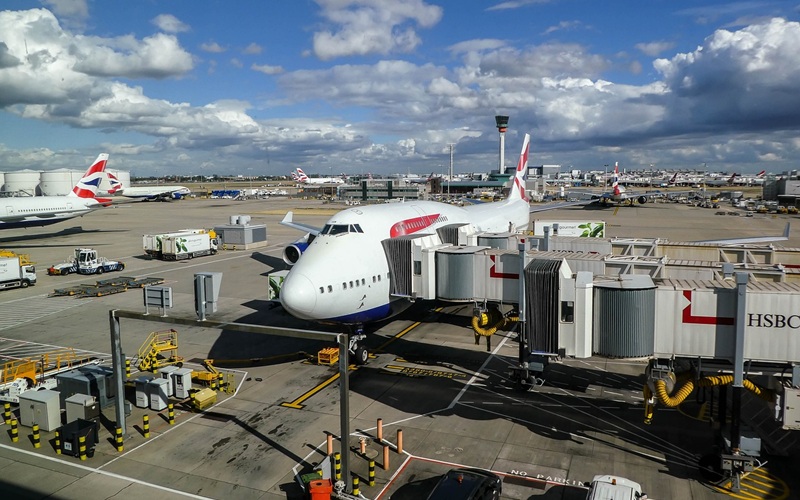
The Department for Transport is consulting on a draft National Policy Statement that would pave the way for a third runway at Heathrow. We have reviewed the detailed technical papers that sit behind that consultation – the cost-benefit analysis, economic modelling, aviation forecasts, sustainability appraisal and health impact assessment. It is clear that the DfT’s own evidence does not support the case for Heathrow expansion, and in several places actively undermines it.
Here’s a summary of what we found:
The economic case does not add up on the Government’s own figures
The Department’s own “cost-benefit” appraisal produces a negative result in every single scenario it tests. Depending on the assumptions used, the net cost to the country ranges from £23 billion to £120 billion. The appraisal’s executive summary states that once the costs of environmental damage are properly counted, they outweigh the benefits.
The wider economic boost Heathrow expansion is supposed to deliver turns out to be tiny. The Government’s own modelling puts the GDP benefit at around 0.05% by the mid-2050s – a fraction of a percent for a scheme costing tens of billions and decades of disruption. Most of that supposed “benefit” comes from the one-off spending on construction, not from any lasting boost to aviation activity itself.
The promised jobs benefit is similarly weak. The Government’s economic model assumes the country reaches full employment regardless of whether the runway is built, which means any employment increase from the scheme is transient rather than permanent. It also confirms that if a new runway opens, growth in passengers would in early years come mostly from displacing passengers who would otherwise have flown from other UK airports, not from genuinely new demand.
The tourism deficit embarrassment
The skewed economic case for aviation growth ignores a basic fact: UK residents flying abroad on holiday spend far more overseas than foreign visitors spend here. That’s clear in the Government’s own statistics. Official figures show UK residents spent £78.6 billion travelling abroad in 2024, against £32.5 billion spent in the UK by overseas visitors – there is a tourism deficit of around £46 billion in a single year. That’s roughly three-quarters of the UK’s entire current account deficit for 2024. Expanding Heathrow – the UK’s dominant aviation hub – would drain the nation’s finances even faster, rather than bring economic benefit.
The climate case rests on fuel that doesn’t exist yet, at a price nobody can afford
The Government’s forecasts show that its net zero pathway for aviation has got harder to achieve since its last strategy, not easier. Projected emissions in 2050 are now higher than they were in the 2022 Jet Zero Strategy, because the Department has reduced how much it expects sustainable aviation fuel (SAF) to contribute – down from 50% of the fuel mix to 30%.
Even that projection looks optimistic. The DfT’s evidence shows SAF only reaches 17% of the fuel mix by 2040, and stays flat after that – so 83% of jet fuel burned in 2050 is still expected to be ordinary fossil kerosene. SAF is roughly two and a half to three times more expensive than kerosene, and that gap is not expected to close.
The carbon price used to justify the proposed expansion is, by the DfT’s own admission, already out of date and too low. More recent forecasts show carbon prices running significantly higher than the consultation figures. The price used is around a third of the Government’s official valuation of the true cost of carbon to society. When the Department tested what would happen if carbon were priced at its full value, passenger demand growth fell sharply – so the whole “need” case is built on carbon being priced artificially cheaply.
The noise case is built on flight paths that don’t exist yet
The biggest evidential gap of all matters directly to communities under the flight paths of Luton and every other London-area airport, not just Heathrow.
The noise assessment for the consultation uses old flight paths dating from a 2015 study, because the airspace redesign hasn’t happened yet. The UK Airspace Design Service (UKADS) has barely started its work, and the DfT admits the flight paths eventually used “may be different from those that informed the noise assessment”. In other words, they are guessing on noise impacts using an assessment they know to be inadequate.
Nowhere in the policy document is there any assessment of how a bigger Heathrow would affect the airspace available to other airports nearby. LADACAN has raised this issue for years in relation to arriving and departing aircraft at Luton Airport being held low at 5,000 for 20 miles or more because of conflicts with Heathrow traffic and that from other airports. Adding a third runway at Heathrow without any visibility of whether or how these issues would be resolved is crass and irresponsible: aircraft noise is known to harm health.
In conclusion
The evidence indicates that no new UK runway capacity is required. For economic and environmental reasons, existing capacity should be used more responsibly, and demand actively managed downwards – for example through a frequent flyer levy – rather than expanded to meet specious growth forecasts. We see no evidence that commercial aviation can be made sustainable (using the UN Brundtland definition) in the short to medium term. A trajectory of continuous aviation capacity growth as the UK approaches its 2050 net zero commitment, while so-called sustainable aviation fuel remains too costly and too scarce to substitute for fossil kerosene at the scale required, is irrational and irresponsible.
Expanding aviation harms the UK economy: £46bn more was spent overseas by UK tourists then brought in during 2024. The supposed economic benefit of expanding Heathrow is a miniscule fraction of a percent of GDP, dwarfed by the increasing costs of climate change. And as climate change worsens, the price attached to carbon emissions will have to increase, leaving the hard-to-decarbonise leisure aviation sector very exposed because it has no sustainable future.
Our submission to the DfT’s consultation can be downloaded by clicking this link.